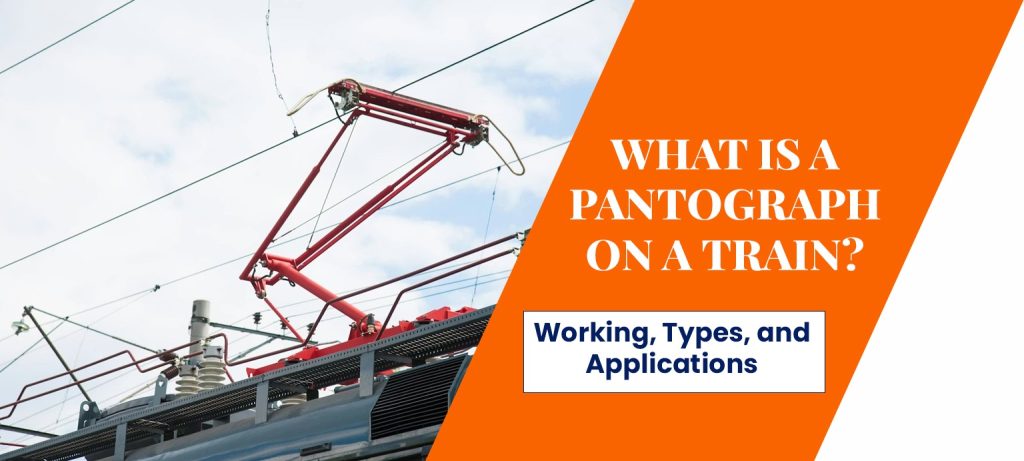
A pantograph is the device mounted on the roof of an electric locomotive or railway vehicle that stays in contact with the overhead wire to draw power. It reaches up, maintains contact with the conductor, and lets current pass through to the traction motors and other onboard equipment.
How Does a Railway Pantograph Collect Power?
Once raised, the pantograph’s collector head presses against the overhead conductor and maintains contact while the vehicle is in motion, letting current travel from the wire, through the pantograph, into the train’s electrical system. This is called linear current collection: the collector moves along a line rather than turning against a rotating surface.
The Role of the Pantograph Carbon Strip
The carbon strip is the part that makes direct contact with the overhead wire, and its properties largely determine how well the pantograph performs. Carbon suits this application because it has suitable electrical properties and is self-lubricating, useful for continuous sliding contact, and the grade used needs to match the electrical and operating requirements of the system.
Plain Carbon and Metallised Carbon
The choice of material depends on the electrical system in use. Plain carbon is used on high-voltage AC systems such as 15 kV and 25 kV lines, while metallised carbon is used on low-voltage DC systems from 75 V to 3000 V, offering lower electrical resistance and greater strength than plain carbon. The right choice depends on system voltage, current drawn, and contact arrangement.
What Makes Linear Current Collection Different?
A conventional carbon brush works against a rotating surface, but a pantograph works differently: the wire stays fixed and the strip glides along it continuously. Because the collector operates outdoors and is exposed to changing conditions, materials need to be harder, denser and more abrasive than typical brush materials while keeping the properties suited to this kind of contact.
Current Loading and Contact Area
Required current loading depends on the design of the railway system and operating conditions, generally expressed as current per unit length of contact. Plain carbon is typically rated around 5 A per mm, while metallised carbon can handle roughly 12 to 16 A per mm under specified conditions. The actual rating depends on the strip, conductor and operating requirements.
Why the Carbon Strip Matters to the System
Carbon offers several advantages over collector materials such as copper, sintered metal and steel. It can help form a protective film on the contact wire, reducing wire wear compared with metal-to-metal contact. Carbon collectors can also offer lower maintenance and running costs, reduced pan-head mass, high-speed operation, reduced electrical interference, low noise and self-lubrication.
Where Are Pantograph Current Collectors Used?
Pantograph current collectors are used wherever overhead electrification supplies power to rail vehicles: railway traction systems, electric locomotives, metro and urban rail networks, and suburban commuter trains. Each application has its own voltage and load pattern, which is why the right carbon grade depends on the system it is used in.
Key Points to Consider When Choosing a Carbon Strip
Selecting a suitable strip means matching it to actual operating conditions:
• Type of electrical system, voltage and current requirements
• Carbon or metallised carbon grade, and contact arrangement
• Pan-head design, environmental and running conditions
Final Thoughts
A pantograph looks like a simple frame from the platform, but it plays a precise, continuous role every time a train moves. The carbon strip at its tip plays an important role in this process and is designed for continuous sliding contact with the overhead conductor. Matching the right grade and design to the application helps support reliable current collection over time.
Looking for carbon strips and current collectors suited to your railway system? Assam Carbon Products Limited has manufactured carbon and carbon-related products since 1963, with a dedicated range for railway traction. Our range includes current collectors, metallised carbon strips for pantographs, traction carbon brushes and railway signalling contacts, covering both plain and metallised carbon materials. If you are selecting pantograph carbon strips or current collectors for a project, our team can go through the technical requirements with you to help identify a suitable product.