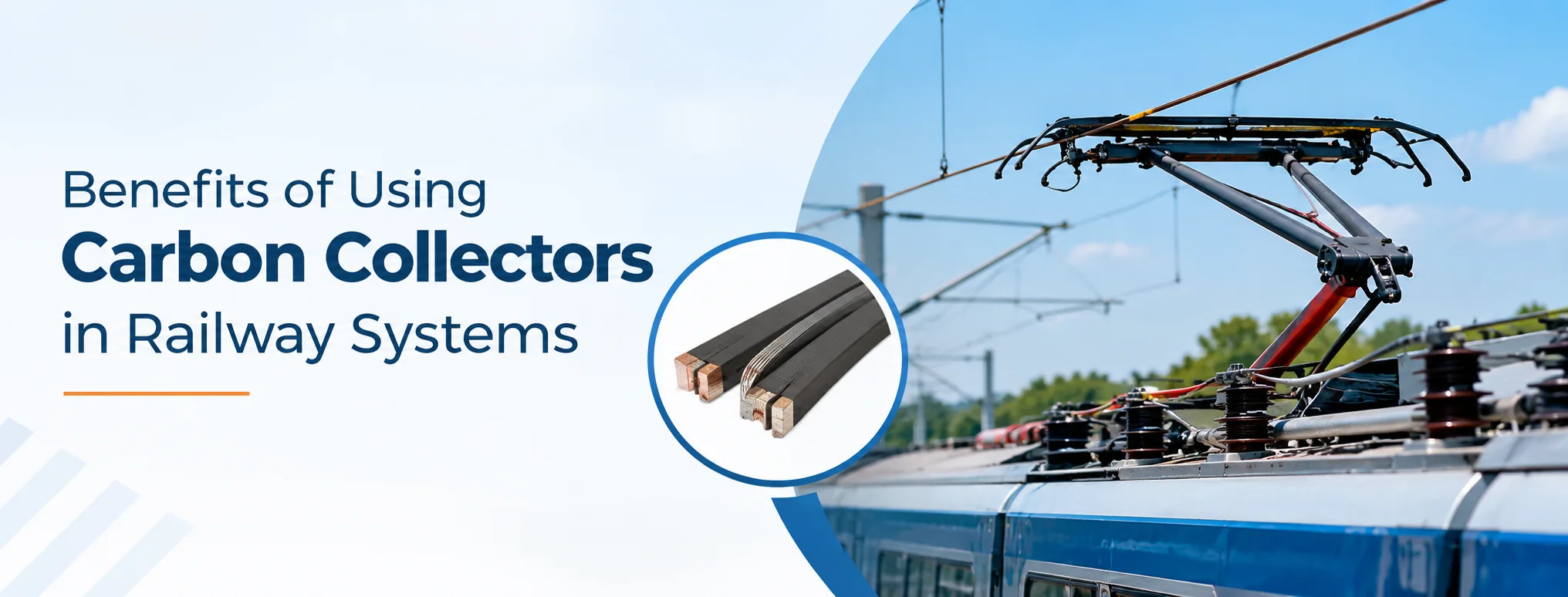
When an electric train runs, it needs a steady supply of electricity. In many trains, power comes from wires above the track. A pantograph on the roof collects this power, and a carbon collector forms the contact point with the wire. This small part has an important job. Its material can affect wire wear, replacement needs and the time spent on maintenance.
What Are Carbon Collectors in Railway Systems?
Look at the roof of an electric train and you may see a pantograph reaching up towards the overhead wire. The carbon collector is fitted to this assembly. As the train moves, it slides along the wire and collects the electricity needed to run the train. The collector must handle repeated contact during daily service. Plain carbon and metallised carbon are used for different applications, depending on the system’s requirements.
1. Less Wear on Contact Wires
Overhead wires are used by trains throughout the day, so wear is something railway teams need to monitor. The collector moves along the wire each time a train passes. A suitable carbon material can help reduce wear at this contact point. This may help the wire remain in service for longer before replacement is needed. The result depends on the collector, contact pressure, train speed and condition of the equipment.
2. Longer Working Life
A carbon collector does not have a fixed service life for every train. One may wear out sooner than another because working hours, speed and operating conditions differ. The type of carbon and the pressure against the wire also matter. Choosing a collector that suits the application can help make good use of the material. Checking the collector from time to time helps maintenance staff decide when it needs to be replaced.
3. Better Maintenance Planning
Railway teams have to keep an eye on both the pantograph and the overhead wire. During inspection, they check for wear and make sure the parts remain suitable for use. A carbon collector that helps limit wire wear may reduce some of the work involved in maintaining the system. It still needs regular inspection. Knowing its condition helps the team plan replacement work at the right time.
4. Keeping Running Costs Under Control
Parts need replacing as they wear out, and maintenance work also costs money. For railway operators, these expenses add up over time. A suitable carbon collector may help reduce some costs if it limits contact wire wear and avoids unnecessary replacement work. The savings will depend on how the equipment is used and maintained. It makes sense to consider service life and maintenance needs along with the initial cost.
5. Use in High-Speed Railway Systems
A moving train needs its pantograph to maintain contact with the overhead wire. This becomes particularly important at higher speeds. The collector’s material, shape, weight and contact pressure all affect how the assembly works. Carbon collectors can be designed for different railway applications, including certain high-speed systems. Before selecting one, engineers need to check that it matches the train, pantograph and overhead equipment.
6. Managing Electrical Arcing
A brief gap between the collector and overhead wire can cause an electrical arc. If this happens often, the contact surfaces may suffer additional wear. Carbon is used in electrical contact parts because of its useful properties in these conditions. However, it does not prevent every instance of arcing. The design of the pantograph, the pressure on the wire and the condition of the equipment all need attention.
7. Noise During Train Operation
The contact between a pantograph and an overhead wire can produce sound while a train is moving. The material used for the collector can affect this contact noise. In some systems, carbon collectors may produce less noise than certain metal alternatives. The difference depends on the train’s speed, the pantograph design and the condition of the wire. Other parts of the railway system also contribute to the overall noise.
8. Natural Lubricating Properties of Carbon
Carbon has natural lubricating properties, which are useful when surfaces slide against each other. This is one reason it is used in railway current collection equipment. As the collector moves along the overhead wire, the material helps manage friction at the contact point. The actual result depends on the grade of carbon and the working conditions. The material must be selected to suit the intended use.
9. Choosing Plain or Metallised Carbon
Plain carbon and metallised carbon are not suitable for every application in the same way. They have different electrical and mechanical properties. Metallised carbon can provide lower electrical resistance and greater strength in suitable conditions, while plain carbon may suit other requirements. The decision should be based on the voltage, current load, overhead wire and pantograph design. Checking the technical specifications before choosing a collector helps avoid a poor match.
Factors to Consider When Selecting Carbon Collectors
The right collector depends on the railway equipment and the conditions in which it will run. Before selecting a product, check the following points:
• Electrical requirements: Make sure the collector suits the system’s voltage and current.
• Carbon grade: Check which material is suitable for the application.
• Fit: Confirm that the collector matches the pantograph.
• Train speed: Consider the speed at which the equipment will operate.
• Inspection needs: Check how wear should be monitored and when replacement may be needed.
These points give railway teams a practical starting point when comparing carbon collectors for their equipment.
Final Thoughts
Carbon collectors help electric trains take power from overhead wires. The right product can help reduce contact wire wear, manage friction and support maintenance planning. Its working life and performance depend on the material, equipment design and conditions of use. Railway operators should consider these factors before choosing a collector. Regular inspection is also important to keep the pantograph and overhead current collection system in suitable working condition.
Do you need carbon components for railway equipment or other industrial uses? At Assam Carbon Products Limited, we manufacture electrical and mechanical carbon products for a variety of applications. Our range includes current collectors, metallised carbon strips for pantographs, carbon brushes and railway signalling contacts. We also manufacture carbon seals, bearings, gland rings, steam joints, thrust pads, carbon vanes and specialty graphite products. Share your product requirements with our team to discuss the available options for your application.